

How To Become An Orthopedic Doctor In Pakistan (2026)
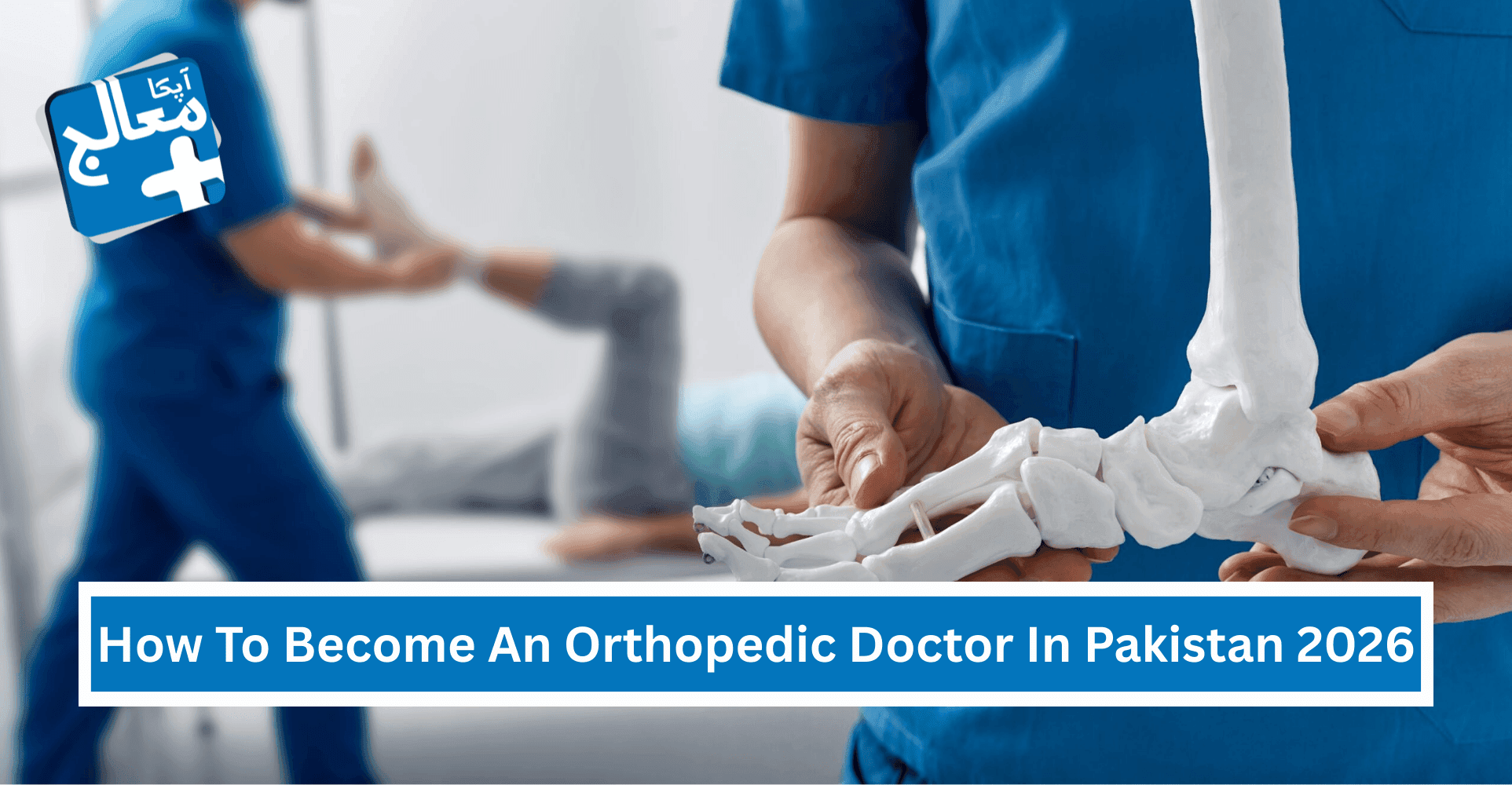
Becoming an orthopedic doctor in Pakistan is not a shortcut career. It is a long, demanding journey that blends academic excellence, surgical skill, physical stamina, and deep ethical responsibility. Yet, for students who are passionate about restoring mobility, relieving pain, and improving quality of life, orthopedics remains one of the most respected and impactful medical specialties.
This updated guide explains exactly how to become an orthopedic doctor in Pakistan, from intermediate education to FCPS/MCPS specialization, licensing, costs, timelines, and real-world expectations. It is written for students, parents, and international readers who want clarity, not confusion.
You can connect with verified professionals through Apka Muaalij, Pakistan’s leading digital healthcare platform.
What Is an Orthopedic Doctor?
An orthopedic doctor (orthopedic surgeon) specializes in the diagnosis, treatment, and surgical management of disorders of bones, joints, ligaments, tendons, muscles, and the spine. This includes fractures, sports injuries, congenital deformities, arthritis, and trauma.
According to Campbell’s Operative Orthopaedics (considered a global reference text):
“Orthopedic surgery is the medical discipline concerned with preserving, restoring, and developing the form and function of the musculoskeletal system.”
In Pakistan, orthopedics is heavily involved in trauma care, especially due to road traffic accidents, making it a frontline surgical specialty.
Also read: "How To Become A Nutritionist In Pakistan 2026 | Complete Career Guide"
Who Should Choose Orthopedics?
Orthopedics is not for everyone, and experienced surgeons emphasize this early.
Dr. Muhammad Imran, FCPS Orthopedics (Lahore), notes:
“You need mental resilience, physical endurance, and patience. Orthopedics involves long surgeries, night emergencies, and years of gradual skill-building.”
You may be suited for orthopedics if you:
-
Enjoy anatomy and biomechanics
-
Can handle physically demanding work
-
Are comfortable with surgical pressure
-
Prefer practical, hands-on medicine
-
Accept long training years with delayed rewards
Educational Pathway to Become an Orthopedic Doctor in Pakistan
Step 1: FSc (Pre-Medical) or Equivalent
Required subjects:
-
Biology
-
Chemistry
-
Physics
Minimum marks:
-
60% (most public medical colleges)
-
Higher scores improve MDCAT merit
Alternative routes:
-
A-Levels (with IBCC equivalence)
-
International high school qualifications (with PMC recognition)
Step 2: MDCAT Examination
The Medical and Dental College Admission Test (MDCAT) is mandatory.
Key points:
-
Conducted under the Pakistan Medical & Dental Council (PMDC)
-
Includes Biology, Chemistry, Physics, English, and Logical Reasoning
-
Merit is calculated using:
-
FSc/A-Level score
-
MDCAT score
-
A strong MDCAT score is essential to enter a recognized MBBS program, which is the foundation of orthopedics.
Step 3: MBBS Degree (5 Years)
You must complete an MBBS from a PMDC-recognized medical college.
MBBS Structure:
|
Year |
Focus |
|
1–2 |
Basic sciences (Anatomy, Physiology, Biochemistry) |
|
3 |
Pathology, Pharmacology, Microbiology |
|
4 |
Medicine, Surgery, Gynecology |
|
5 |
Clinical rotations, electives |
Orthopedics is taught under General Surgery, but a serious interest usually develops during house job rotations.
Step 4: House Job (1 Year)
After MBBS, a mandatory one-year house job is required.
Rotation requirements:
-
6 months Medicine
-
6 months Surgery (preferably Orthopedics)
This year is critical. Many surgeons decide their future specialty during orthopedic emergency calls, fracture management, and OT exposure.
Read: "25 Best Cancer Hospitals in Pakistan (Government & Private) & How to Choose"
Specialization in Orthopedics (Postgraduate Training)
Major Routes Available in Pakistan
1. FCPS (Orthopedic Surgery) — Gold Standard
The Fellowship of the College of Physicians and Surgeons Pakistan (FCPS) is the most recognized and competitive pathway.
Stages:
-
FCPS Part-I (theory exam)
-
4 years of structured training
-
FCPS Part-II (final exam)
Training hospitals:
Must be CPSP-accredited teaching hospitals.
Dr. Ahmed Raza, Associate Professor of Orthopedics, writes in JCPSP:
“FCPS training emphasizes progressive responsibility, supervised surgery, and competency-based assessment, aligning with international standards.”
2. MS Orthopedics (University Route)
Offered by selected public universities.
Duration:
-
4–5 years
Limitations:
-
Fewer seats
-
Variable recognition internationally
3. MCPS (Orthopedics)
A shorter qualification (2 years), not equivalent to FCPS, but useful for limited practice or as a stepping stone.
Comparison of Postgraduate Options
|
Program |
Duration |
Recognition |
Career Scope |
|
FCPS |
~5 years |
Highest |
Consultant, academic, abroad |
|
MS |
4–5 years |
Moderate |
Local practice |
|
MCPS |
2 years |
Limited |
Restricted roles |
Read: "How To Become A Dermatologist In Pakistan 2025 - A Guide"
Licensing and Registration (PMDC)
To practice legally, you must be registered with the Pakistan Medical & Dental Council (PMDC).
Required registrations:
-
Provisional (after MBBS)
-
Permanent (after house job)
-
Additional specialist registration (after FCPS/MS)
Failure to register can lead to legal consequences and employment bans.
How Long Does It Take?
|
Stage |
Duration |
|
FSc |
2 years |
|
MBBS |
5 years |
|
House Job |
1 year |
|
FCPS Training |
4–5 years |
|
Total |
12–13 years |
This does not include optional fellowships or subspecialty training.
Read: "How To Become A Psychologist In Pakistan 2025 - A Complete Guide"
Cost of Becoming an Orthopedic Doctor in Pakistan
Estimated Expenses
|
Stage |
Public |
Private |
|
MBBS |
PKR 200k–500k total |
PKR 8–12 million |
|
FCPS |
Minimal |
Training-based |
|
Exams & Registration |
PKR 200k–400k |
Same |
Public sector education remains significantly more affordable but highly competitive.
Career Scope and Demand in Pakistan
Orthopedics is among the most in-demand specialties due to:
-
Rising trauma cases
-
Aging population
-
Sports injuries
-
Road accidents
Work settings include:
-
Government hospitals
-
Private hospitals
-
Trauma centers
-
Teaching institutions
-
NGOs and humanitarian missions
Subspecialties gaining popularity:
-
Spine surgery
-
Pediatric orthopedics
Also, go through: "How to Become a General Physician in Pakistan (2025 Guide + Salary & Scope)"
Income Expectations (Realistic View)
Income varies widely based on experience, location, and private practice.
|
Level |
Approx. Monthly Income |
|
Resident |
PKR 80k–150k |
|
Fresh Consultant |
PKR 250k–400k |
|
Established Surgeon |
PKR 600k–1.5M+ |
Senior surgeons often emphasize that reputation matters more than speed in orthopedics.
Ethical and Spiritual Dimensions
For Muslim doctors, orthopedics aligns deeply with Islamic values of relieving hardship and preserving human dignity.
The Prophet ﷺ said:
“The most beloved people to Allah are those who are most beneficial to people.”
(Al-Mu‘jam al-Awsat)
Treating fractures, restoring movement, and easing pain are acts of service with lasting impact.
Read: "In-Clinic Vs. Online Doctor Consultation – Which Is Better In Pakistan?"
Frequently Asked Questions (FAQs)
Is orthopedics hard compared to other specialties?
Yes. It is physically and mentally demanding, especially during training.
What marks are required in FSc for orthopedics?
At least 60%, but higher marks are essential for MBBS merit.
Can females become orthopedic surgeons in Pakistan?
Yes. The number is growing, though the field remains male-dominated.
Is FCPS better than MS Orthopedics?
FCPS is generally more recognized nationally and internationally.
How many seats are available for FCPS Orthopedics?
Very limited. Competition is intense.
Can I do orthopedics abroad after an MBBS in Pakistan?
Yes, but exams like PLAB, USMLE, or MRCS are required.
Is private practice necessary to earn well?
Not mandatory, but it significantly increases income.
What is the age limit for FCPS?
No strict age limit, but earlier entry improves chances.
Does orthopedics involve night duties?
Yes, especially trauma and emergency calls.
Is MCPS enough to become a consultant?
No. FCPS or MS is required for full consultant status.
Can I specialize further after FCPS?
Yes, through fellowships in spine, sports, or joint surgery.
Are orthopedic surgeons in demand in rural areas?
Very much so, due to a lack of specialists.
Is orthopedics suitable for someone weak physically weak?
Physical endurance is important, but technique matters more over time.
What subjects matter most for orthopedics?
Anatomy, physiology, and surgery.
Disclaimer: This article is for educational and informational purposes only. Admission policies, fees, examination structures, and regulatory requirements may change. Always verify details with PMDC, CPSP, and official university sources before making academic or career decisions.

Find & Book the best "Orthopedic Surgeon" near you
Book Appointment
Dr. Muhammad Usama, RPh
Dr. Dr. Muhammad Usama, RPh is a highly experienced specialist based in Lahore, Pakistan with over several years of clinical expertise. Specializing in evidence-based and patient-centered care, they provides advanced treatment tailored to individual needs. Currently available on Apka Muaalij, appointments can be booked at 042-32377001.