

Is Erectile Dysfunction Psychological? Symptoms, Causes, Risks, Treatments & More


Erectile dysfunction (ED) is one of the most common sexual health concerns affecting men worldwide. While many people associate erectile dysfunction with aging or physical health problems, psychological factors can play a significant role in the development and persistence of ED.
Psychological erectile dysfunction occurs when mental or emotional factors interfere with a man's ability to achieve or maintain an erection sufficient for sexual activity. Stress, anxiety, depression, relationship conflicts, low self-esteem, and performance fears can all affect sexual function.
The condition can be frustrating, affect confidence, strain relationships, and reduce overall quality of life. Fortunately, psychological ED is often treatable, especially when the underlying emotional or mental health issues are identified and addressed.
In this comprehensive guide, you'll learn whether erectile dysfunction can be psychological, how to recognize the symptoms, risk factors, diagnosis methods, treatment options, prevention strategies, and when professional help is needed.
Must read: " Why Am I Always Overthinking? 10 Surprising Reasons Most People Miss"
Need Professional Health Support?
Need personalized guidance for erectile dysfunction or psychological concerns? Consult qualified healthcare professionals through Apka Muaalij or call 042-32377001 for expert assistance.
Key Takeaways
-
Erectile dysfunction can result from psychological, physical, or combined causes.
-
Anxiety, depression, stress, and relationship problems are common psychological triggers.
-
Psychological ED often develops suddenly and may occur despite normal morning erections.
-
Professional evaluation helps distinguish psychological from physical causes.
-
Cognitive behavioral therapy and counseling are effective treatments.
-
Healthy lifestyle habits support both mental health and sexual function.
-
Early treatment improves outcomes and quality of life.
What Is Erectile Dysfunction?
Erectile dysfunction is the persistent inability to achieve or maintain an erection firm enough for satisfactory sexual activity.
Occasional erection difficulties are normal and can happen due to fatigue, stress, or temporary health issues. However, when erectile problems occur regularly or repeatedly, they may indicate ED and warrant medical evaluation.
According to the National Institute of Diabetes and Digestive and Kidney Diseases (NIDDK), ED affects millions of men globally and becomes more common with age, although it is not an inevitable part of aging.
What Is Psychological Erectile Dysfunction?

Psychological erectile dysfunction refers to ED primarily caused by mental, emotional, or relationship-related factors rather than physical abnormalities.
In psychological ED, the nervous system, blood vessels, and hormones may function normally, but emotional distress disrupts the brain-body signals required for sexual arousal and erection.
Common Characteristics of Psychological ED
-
Sudden onset of symptoms
-
Ability to have spontaneous morning erections
-
Normal erections during masturbation
-
Erections that vary depending on partner or situation
-
Symptoms linked to stress or emotional events
-
Performance-related concerns
Must read: "Early Signs Of Schizophrenia: Symptoms You Should Never Ignore"
How Does the Mind Affect Erections?
Sexual arousal begins in the brain.
Thoughts, emotions, sensory stimulation, and psychological well-being activate nerve pathways that trigger blood flow to the penis. When anxiety, fear, depression, or stress interfere with these signals, erectile function may be affected.
The Process
-
Sexual stimulation activates the brain.
-
The brain sends signals through nerves.
-
Blood vessels relax and expand.
-
Increased blood flow enters the penis.
-
An erection develops.
Psychological stress can interrupt this process at multiple stages.
Symptoms of Psychological Erectile Dysfunction
Psychological ED may present differently from physical erectile dysfunction.
Common Symptoms
-
Difficulty achieving an erection during intercourse
-
Trouble maintaining an erection
-
Reduced sexual confidence
-
Performance anxiety
-
Fear of sexual failure
-
Relationship tension
-
Avoidance of intimacy
-
Loss of sexual satisfaction
Emotional Symptoms
-
Anxiety
-
Feelings of inadequacy
-
Embarrassment
-
Frustration
-
Low self-esteem
Must read: "Mental Health Treatment In Pakistan: Symptoms, Causes, Recovery & More"
7 Psychological Causes of Erectile Dysfunction
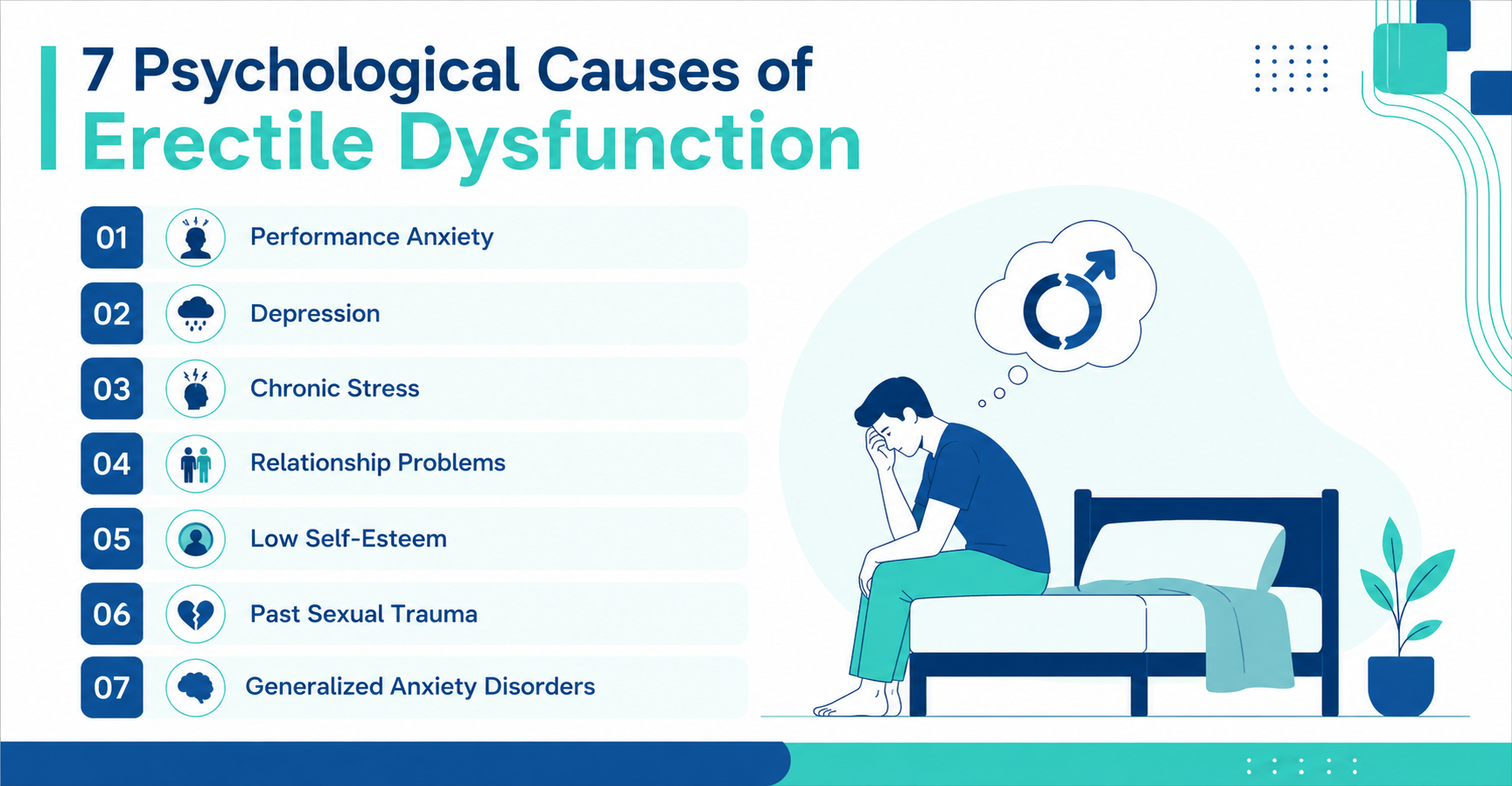
1. Performance Anxiety
Performance anxiety is among the most common psychological causes of ED.
A man may become overly concerned about satisfying a partner or maintaining an erection. These worries create stress that interferes with sexual function.
2. Depression
Depression can reduce sexual desire, lower energy levels, and affect the brain chemicals involved in sexual arousal.
Research published in the Journal of Sexual Medicine has shown a strong association between depression and erectile dysfunction.
3. Chronic Stress
Financial problems, workplace pressure, family responsibilities, and academic stress can increase cortisol levels and negatively affect sexual performance.
4. Relationship Problems
Relationship conflicts may contribute to:
-
Reduced emotional intimacy
-
Poor communication
-
Lack of trust
-
Sexual dissatisfaction
5. Low Self-Esteem
Negative body image or self-worth concerns can interfere with confidence and sexual performance.
6. Past Sexual Trauma
Traumatic sexual experiences can lead to anxiety, fear, and avoidance behaviors that affect erectile function.
7. Generalized Anxiety Disorders
Persistent anxiety can activate the body's stress response, making erections more difficult to achieve.
Physical vs Psychological Erectile Dysfunction
|
Feature |
Psychological ED |
Physical ED |
|
Onset |
Sudden |
Gradual |
|
Morning erections |
Usually present |
Often reduced |
|
Situational erections |
Common |
Less common |
|
Stress-related |
Frequently |
Less frequently |
|
Age-related |
Can occur at any age |
More common with aging |
|
Masturbation erections |
Often normal |
May be impaired |
|
Emotional triggers |
Strong association |
Limited association |
Risk Factors for Psychological Erectile Dysfunction
Several factors increase the likelihood of developing psychological ED.
Mental Health Factors
-
Anxiety disorders
-
Depression
-
Chronic stress
Lifestyle Factors
-
Sleep deprivation
-
Alcohol misuse
-
Recreational drug use
-
Lack of exercise
Social Factors
-
Relationship difficulties
-
Social isolation
-
Financial stress
-
Workplace pressure
Also read: "How Family Pressure In Pakistan Affects Mental Health & How To Fix It"
Health Conditions That May Contribute
Even when psychological factors are dominant, underlying medical conditions can worsen symptoms.
These include:
-
Hormonal imbalances
Can Young Men Develop Psychological Erectile Dysfunction?
Yes.
Psychological ED is particularly common among younger men because physical causes are less prevalent in this age group.
Common triggers include:
-
Academic pressure
-
Social anxiety
-
Pornography-related performance concerns
-
Relationship stress
-
Body image issues
-
First-time sexual experiences
Studies suggest that psychological factors account for a significant proportion of erectile dysfunction cases in men under 40.
How Is Psychological Erectile Dysfunction Diagnosed?
Diagnosis involves identifying whether physical, psychological, or mixed factors are contributing to symptoms.
Medical Assessment
A healthcare provider may evaluate:
-
Medical history
-
Sexual history
-
Medication use
-
Lifestyle habits
-
Relationship factors
Physical Examination
The examination helps rule out:
-
Hormonal disorders
-
Neurological conditions
-
Penile abnormalities
Laboratory Tests
Possible tests include:
Mental Health Assessment
A doctor may screen for:
-
Anxiety
-
Depression
-
Stress disorders
-
Relationship concerns
If erectile difficulties are affecting your confidence or relationship, Apka Muaalij can connect you with experienced healthcare professionals for confidential evaluation and treatment guidance. Call 042-32377001.
6 Treatment for Psychological Erectile Dysfunction
The most effective treatment depends on the underlying cause.
1. Cognitive Behavioral Therapy (CBT)
CBT helps identify and change negative thought patterns contributing to ED.
Research shows CBT can significantly improve erectile function and reduce performance anxiety.
2. Sex Therapy
Sex therapists help individuals and couples address:
-
Performance anxiety
-
Communication barriers
-
Sexual misconceptions
-
Relationship difficulties
More read: "Which Mental Health Specialist Is Right for You? Complete 2026 Guide"
3. Stress Management
Helpful techniques include:
-
Meditation
-
Deep breathing exercises
-
Mindfulness
-
Yoga
-
Relaxation training
4. Treatment of Anxiety and Depression
Managing underlying mental health conditions often improves erectile function.
Treatment may include:
-
Psychotherapy
-
Counseling
-
Appropriate medications when prescribed
5. Lifestyle Modifications
Healthy lifestyle habits improve both mental and sexual health.
Recommended changes include:
-
Regular exercise
-
Adequate sleep
-
Smoking cessation
-
Reduced alcohol consumption
-
Healthy nutrition
6. Erectile Dysfunction Medications
Some men may benefit from medications such as:
-
Sildenafil
-
Tadalafil
-
Vardenafil
-
Avanafil
These medications improve blood flow but may be most effective when combined with psychological treatment if emotional factors are involved.
Can Psychological ED Be Reversed?
In many cases, yes.
Psychological erectile dysfunction is often highly treatable and may completely resolve when underlying issues are successfully addressed.
Recovery depends on:
-
Identifying root causes
-
Seeking timely treatment
-
Managing stress
-
Improving communication
-
Maintaining healthy lifestyle habits
Many men experience substantial improvement within weeks to months of targeted treatment.
Prevention Tips
Healthy Habits That Support Sexual Function
-
Exercise regularly
-
Sleep 7–9 hours nightly
-
Manage stress effectively
-
Limit alcohol intake
-
Avoid tobacco use
-
Maintain a healthy weight
-
Seek treatment for mental health concerns
-
Strengthen relationship communication
Mental Health Strategies
-
Practice mindfulness
-
Address anxiety early
-
Seek counseling when needed
-
Avoid excessive self-criticism
-
Develop realistic sexual expectations
Complications of Untreated Psychological ED
Without treatment, psychological ED may contribute to:
-
Persistent anxiety
-
Depression
-
Relationship difficulties
-
Reduced self-esteem
-
Sexual avoidance
-
Lower quality of life
Early intervention often prevents these complications.
Must read: "Mental Health In Pakistan: Why Millions Are Suffering In Silence"
Psychological Erectile Dysfunction in Pakistan
Psychological erectile dysfunction is frequently underreported in Pakistan due to social stigma surrounding sexual health and mental health discussions.
Common local contributing factors include:
-
Financial pressures
-
Work-related stress
-
Marital expectations
-
Limited access to sexual health education
-
Cultural reluctance to seek mental health support
Increasing awareness and encouraging professional consultation can help men receive effective treatment earlier.
When Should You See a Doctor?
Seek medical evaluation if:
-
Erectile dysfunction lasts more than a few weeks
-
Symptoms occur regularly
-
Sexual difficulties affect relationships
-
You experience anxiety or depression
-
You have diabetes, hypertension, or heart disease
-
ED develops suddenly without an obvious explanation
Prompt assessment can identify both psychological and physical contributors.
Professional Support for Erectile Dysfunction in Pakistan
If erectile dysfunction is affecting your confidence, relationships, or daily life, a professional evaluation can help identify the underlying physical or psychological causes and guide effective treatment.
Through Apka Muaalij, you can consult experienced psychiatrists, psychologists, and healthcare professionals for confidential and evidence-based support tailored to your needs.
Support options include:
-
In-person appointments (where available)
-
Comprehensive mental health and sexual health assessment
-
Personalized treatment planning
📞 Call Apka Muaalij: 042-32377001 for confidential assistance and appointment booking.
Frequently Asked Questions (FAQs)
1. Can anxiety alone cause erectile dysfunction?
Yes. Anxiety can interfere with the brain signals needed for sexual arousal and erection. Performance anxiety is one of the most common psychological causes of erectile dysfunction.
2. How can I tell if my ED is psychological?
Psychological ED often develops suddenly, varies by situation, and occurs despite normal morning erections or erections during masturbation. A healthcare provider can help determine the cause.
3. Is psychological erectile dysfunction common?
Yes. Psychological factors contribute to many cases of ED, particularly among younger men and individuals experiencing stress, anxiety, or relationship issues.
4. Can depression cause erectile dysfunction?
Yes. Depression can affect sexual desire, arousal, confidence, and erectile function. Some antidepressant medications may also contribute to sexual side effects.
5. Can therapy cure psychological erectile dysfunction?
Many men experience significant improvement or complete resolution of symptoms through therapies such as CBT, counseling, and sex therapy.
6. Does stress affect erections?
Yes. Chronic stress increases stress hormones that can interfere with sexual arousal and erectile function.
7. Are ED medications effective for psychological ED?
They can help improve erections, but addressing the underlying psychological cause often provides the best long-term results.
8. Can relationship problems lead to erectile dysfunction?
Yes. Emotional conflicts, poor communication, lack of intimacy, and unresolved relationship issues may contribute to psychological ED.
9. Is psychological ED reversible?
In many cases, psychological ED is reversible with appropriate treatment, stress management, counseling, and healthy lifestyle changes.
10. Should young men worry about erectile dysfunction?
ED in younger men is often related to psychological factors rather than serious physical disease, but persistent symptoms should still be evaluated by a healthcare professional.
Disclaimer: This article is intended for educational and informational purposes only. It is not a substitute for professional medical advice, diagnosis, or treatment. Always consult a qualified healthcare professional regarding any medical condition, symptoms, or treatment decisions. Never delay seeking medical advice because of information you have read in this article.

Find & Book the best "Psychologist" near you
Book Appointment