

Why Am I Always Overthinking? 10 Surprising Reasons Most People Miss


Do you find yourself replaying conversations, worrying about future events, or analyzing every decision long after it has been made? If so, you're not alone. Overthinking is one of the most common mental habits affecting people of all ages. While occasional reflection can help with problem-solving, persistent overthinking can interfere with sleep, relationships, productivity, and emotional well-being.
Many people assume overthinking is simply a personality trait or a sign of being careful. However, research suggests that chronic overthinking often has deeper psychological, biological, and lifestyle-related causes that are frequently overlooked. In some cases, it may be linked to anxiety, stress, perfectionism, unresolved emotional experiences, or even physical health factors.
Understanding why you overthink is the first step toward breaking the cycle. This article explores the surprising causes of overthinking, its effects on mental and physical health, practical ways to manage it, and when professional support may be beneficial.
Need Professional Mental Health Support?
If persistent overthinking is affecting your sleep, relationships, or daily functioning, consider speaking with a qualified mental health professional through Apka Muaalij or call 042-32377001 for guidance and support.
Must read: "How To Stop A Panic Attack Fast: 7 Ways That Work Within Minutes"
Key Takeaways
-
Overthinking involves repetitive thoughts about past events or future uncertainties.
-
Anxiety, stress, perfectionism, poor sleep, and low self-esteem are common causes.
-
Chronic overthinking can negatively affect mental and physical health.
-
Sleep improvement, exercise, and cognitive strategies may reduce symptoms.
-
Excessive overthinking can sometimes indicate an underlying mental health condition.
-
Professional support can be beneficial when symptoms interfere with daily life.
-
Early intervention often improves long-term mental well-being.
What Is Overthinking?

Overthinking refers to repetitive, excessive thinking that focuses on problems, worries, mistakes, or uncertainties without leading to productive solutions.
Mental health experts generally describe two major forms:
Rumination
Repeatedly dwelling on past events, mistakes, regrets, or perceived failures.
Worry
Constantly thinking about future risks, uncertainties, or worst-case scenarios.
While both are normal human experiences, they become problematic when they consume significant time and emotional energy.
Must read: "You Might Be Depressed Without Realizing It: 12 Signs to Watch For"
Signs You May Be Overthinking
-
Replaying conversations repeatedly
-
Constantly second-guessing decisions
-
Difficulty falling asleep because of racing thoughts
-
Excessive concern about what others think
-
Imagining worst-case scenarios
-
Trouble concentrating on tasks
-
Feeling mentally exhausted despite little physical activity
10 Surprising Reasons of Overthinking Most People Miss
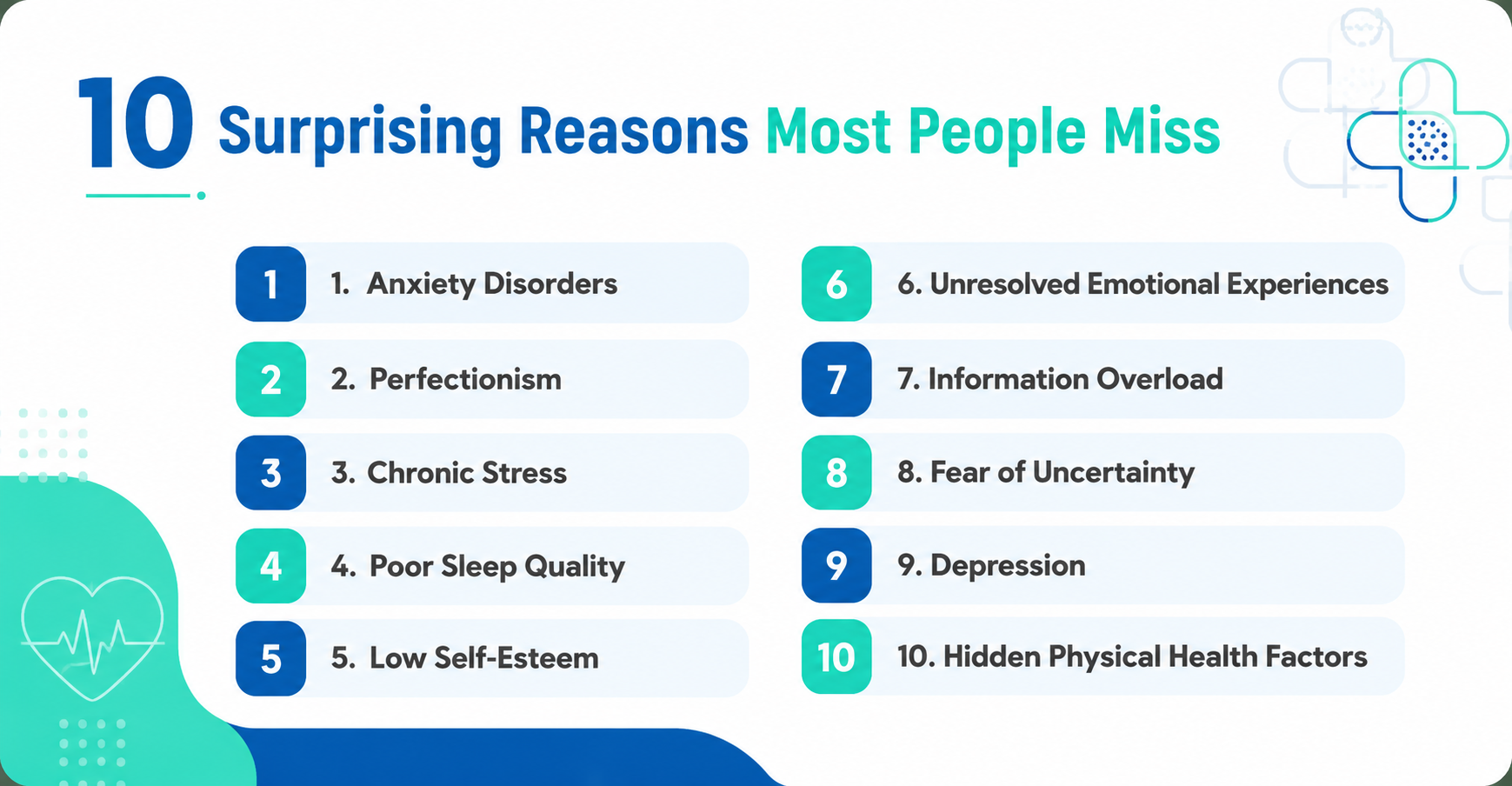
1. Anxiety Disorders
One of the most common causes of chronic overthinking is anxiety.
According to the National Institute of Mental Health (NIMH), anxiety can make the brain continuously scan for threats, even when no immediate danger exists.
This may lead to:
-
Catastrophic thinking
-
Excessive worrying
-
Fear of making mistakes
-
Constant need for reassurance
People with generalized anxiety disorder (GAD) often experience persistent overthinking as a primary symptom.
2. Perfectionism
Many people believe perfectionism is a positive trait. However, research shows it can significantly increase psychological distress.
Perfectionists often:
-
Fear failure
-
Overanalyze decisions
-
Struggle to complete tasks
-
Set unrealistically high standards
As a result, they become trapped in endless mental reviews and self-criticism.
3. Chronic Stress
Long-term stress changes how the brain processes information.
When stress hormones such as cortisol remain elevated for prolonged periods, the brain may become hypervigilant and more likely to engage in repetitive thinking.
Common stress triggers include:
-
Financial concerns
-
Academic pressure
-
Workplace demands
-
Family responsibilities
-
Health-related worries
In Pakistan, economic uncertainty and increasing work-related stress are common contributors to chronic overthinking.
Must read: "Mental Health In Pakistan: Why Millions Are Suffering In Silence"
4. Poor Sleep Quality
Sleep and mental health are closely connected.
Research from the National Institutes of Health (NIH) indicates that inadequate sleep can impair emotional regulation and increase negative thought patterns.
Sleep deprivation may lead to:
-
Increased anxiety
-
Reduced resilience
-
Difficulty controlling intrusive thoughts
-
Poor concentration
Many people notice their overthinking becomes significantly worse after several nights of poor sleep.
5. Low Self-Esteem
People with low self-confidence often question their choices and abilities.
Common thought patterns include:
-
"What if I made the wrong decision?"
-
"What do others think about me?"
-
"Am I good enough?"
This constant self-evaluation can create a cycle of overthinking that becomes difficult to break.
6. Unresolved Emotional Experiences
Past emotional experiences can continue affecting thought patterns long after the event itself.
Examples include:
-
Childhood criticism
-
Bullying
-
Relationship conflicts
-
Grief and loss
-
Emotional trauma
The brain may repeatedly revisit these experiences in an attempt to process unresolved emotions.
7. Information Overload
Modern technology has created unprecedented access to information.
While information can be helpful, excessive exposure can overwhelm decision-making processes.
Examples include:
-
Endless social media scrolling
-
Reading conflicting health advice
-
Consuming excessive news
-
Comparing yourself with others online
Too many options often increase indecision and overanalysis.
More read: "Which Mental Health Specialist Is Right for You? Complete 2026 Guide"
8. Fear of Uncertainty
Humans naturally prefer predictability.
Some individuals have a particularly low tolerance for uncertainty, making them more likely to overthink future events.
Examples include:
-
Waiting for medical test results
-
Job interviews
-
Relationship decisions
-
Financial planning
The mind attempts to create certainty where certainty simply doesn't exist.
9. Depression
Although depression is commonly associated with sadness, it can also involve repetitive negative thinking.
Rumination is a recognized feature of depressive disorders and may involve:
-
Persistent self-blame
-
Negative self-evaluation
-
Feelings of hopelessness
-
Dwelling on past mistakes
10. Hidden Physical Health Factors
Many people overlook physical contributors to overthinking.
Potential factors include:
-
Hormonal fluctuations
-
Nutritional deficiencies
-
Excessive caffeine intake
-
Certain medications
A medical evaluation may be appropriate if symptoms are severe or worsening.
How Overthinking Affects Your Health
|
Area |
Possible Effects |
|
Mental Health |
Anxiety, depression, irritability |
|
Sleep |
Insomnia, poor sleep quality |
|
Physical Health |
Headaches, fatigue, muscle tension |
|
Work Performance |
Reduced productivity, indecision |
|
Relationships |
Communication difficulties, reassurance-seeking |
|
Quality of Life |
Reduced enjoyment and increased stress |
Also read: "How Family Pressure In Pakistan Affects Mental Health & How To Fix It"
Can Overthinking Be a Symptom of a Mental Health Condition?
Yes.
Persistent overthinking may occur alongside:
-
Generalized Anxiety Disorder (GAD)
-
Social Anxiety Disorder
-
Depression
A formal diagnosis requires assessment by a qualified healthcare professional.
How to Stop Overthinking: Evidence-Based Strategies
Practice Awareness
Recognize when productive thinking turns into repetitive mental loops.
Ask yourself:
"Is this thought helping me solve a problem, or am I just replaying it?"
Schedule Worry Time
Research-supported cognitive behavioral techniques sometimes encourage allocating a specific 10–20 minute period each day for worries.
This can reduce all-day rumination.
Challenge Unhelpful Thoughts
Consider:
-
What evidence supports this thought?
-
What evidence contradicts it?
-
Is there another explanation?
This approach is commonly used in Cognitive Behavioral Therapy (CBT).
Improve Sleep Hygiene
Healthy sleep habits include:
-
Maintaining a consistent sleep schedule
-
Reducing screen exposure before bedtime
-
Limiting caffeine late in the day
-
Creating a comfortable sleep environment
Must read: "Mental Health Treatment In Pakistan: Symptoms, Causes, Recovery & More"
Stay Physically Active
Regular exercise can:
-
Reduce stress hormones
-
Improve mood
-
Enhance sleep quality
-
Lower anxiety symptoms
The World Health Organization (WHO) recommends at least 150 minutes of moderate physical activity weekly for adults.
Limit Information Consumption
Try:
-
Reducing social media use
-
Avoiding constant news updates
-
Focusing on reliable information sources
-
Setting boundaries around screen time
If self-help strategies are not reducing excessive worry or rumination, an Apka Muaalij mental health specialist can help identify underlying causes and create a personalized treatment plan. For appointments, call 042-32377001.
Foods and Lifestyle Habits That May Help
Although no food can directly "cure" overthinking, certain habits support brain health.
Beneficial Habits
-
Regular physical activity
-
Adequate hydration
-
Consistent sleep
-
Stress-management practices
-
Social support
Nutrient-Rich Foods
-
Fatty fish
-
Nuts and seeds
-
Whole grains
-
Fruits
-
Vegetables
-
Legumes
Common Myths About Overthinking
"Overthinking Means You're Intelligent"
Reality: Intelligence and overthinking are not the same. Excessive thinking often reduces effective decision-making.
"Thinking More Always Leads to Better Decisions"
Reality: Beyond a certain point, excessive analysis can create confusion and delay action.
"Overthinking Is Just a Personality Trait"
Reality: It can be influenced by anxiety, stress, sleep, trauma, and other treatable factors.
"Everyone Overthinks the Same Way"
Reality: The causes and severity vary significantly from person to person.
Must read: "Early Signs Of Schizophrenia: Symptoms You Should Never Ignore"
When Should You Seek Professional Help?
Consider a professional evaluation if overthinking:
-
Lasts for several weeks or months
-
Disrupts sleep regularly
-
Causes significant anxiety
-
Affects work or academic performance
-
Damages relationships
-
Leads to panic attacks
-
Occurs alongside symptoms of depression
Early intervention often leads to better outcomes.
Professional Mental Health Support in Pakistan
Through Apka Muaalij, patients can access confidential support from experienced psychiatrists, psychologists, and mental health specialists who can assess symptoms, provide diagnostic guidance, and develop personalized treatment plans.
Support options include:
-
In-person appointments (where available)
-
Psychiatric assessments and follow-up care
-
Evidence-based treatment recommendations
📞 For appointments or assistance, call 042-32377001.
Frequently Asked Questions (FAQs)
1. Is overthinking a mental illness?
No. Overthinking itself is not a mental illness. However, it can be a symptom of conditions such as anxiety disorders, depression, OCD, or chronic stress.
2. Why do I overthink everything before sleeping?
The brain often becomes more aware of worries at night because there are fewer distractions. Stress, anxiety, and poor sleep habits can worsen bedtime overthinking.
3. Can overthinking cause physical symptoms?
Yes. Chronic overthinking can contribute to headaches, muscle tension, fatigue, digestive discomfort, increased heart rate, and sleep problems.
4. Is overthinking related to anxiety?
Very often. Anxiety is one of the leading causes of excessive worry and repetitive thinking patterns.
5. Can exercise reduce overthinking?
Research suggests regular physical activity can lower stress hormones, improve mood, and reduce anxiety-related thought patterns.
6. Does social media increase overthinking?
For some people, yes. Constant comparison, information overload, and excessive news consumption can contribute to overanalysis and worry.
7. How can I stop replaying past mistakes?
Practicing self-compassion, challenging negative assumptions, and focusing on lessons learned rather than self-blame can help reduce rumination.
8. Can lack of sleep make overthinking worse?
Yes. Poor sleep impairs emotional regulation and increases vulnerability to negative thinking and anxiety.
9. When should I see a doctor about overthinking?
Seek professional help if symptoms persist, interfere with daily life, affect sleep, or occur alongside anxiety, depression, or panic attacks.
10. Is therapy effective for overthinking?
Yes. Cognitive Behavioral Therapy (CBT) is among the most evidence-based treatments for reducing excessive worry, rumination, and anxiety-related thinking patterns.
Disclaimer: This article is intended for educational and informational purposes only. It is not a substitute for professional medical advice, diagnosis, or treatment. Always consult a qualified healthcare professional regarding any medical concerns, symptoms, or treatment decisions. Never ignore professional medical advice or delay seeking care because of information presented in this article.

Find & Book the best "Psychiatrist" near you
Book Appointment